
Maui Vacation Rental Market Sales Outlook 2026: Stabilization, Strategy, and Opportunity
The Maui vacation rental market has gone through a meaningful reset over the past several years. After an extraordinary surge in demand and pricing during the post-pandemic cycle, the market entered a period of recalibration that tested even seasoned owners and investors.
Heading into 2026, what we are seeing is not distress — but stabilization.
For well-capitalized buyers and long-term investors, this phase of the cycle is beginning to look increasingly strategic. This outlook breaks down what changed, what has already been priced in, and why the next stage of the Maui vacation rental cycle may favor disciplined buyers and experienced owners.
What the 2026 Maui Vacation Rental Sales Market Means for Buyers and Owners
Article Context
This analysis is written from the perspective of a Maui-born real estate advisor licensed in 2006 and a vacation rental operator with more than a decade of hands-on experience managing professionally operated Hawaii vacation rental properties.
The insights shared here are grounded in real-world underwriting, regulatory navigation, revenue optimization, and asset protection — not theory.
Over multiple market cycles, I have worked with buyers, sellers, and off-island owners navigating zoning complexity, shifting regulations, insurance volatility, and evolving tourism demand. The strategies discussed below reflect practical application in West and South Maui resort markets, where property performance, compliance, and long-term positioning matter more than ever.
 A Market Shift That Began Earlier Than Many Realize
While recent headlines highlight volatility, the Maui vacation rental market began shifting as early as 2022 following peak demand in 2021.
By mid-2023, the transition became more pronounced due to:
-
Softening post-COVID travel demand
-
Increased governmental scrutiny of short-term rentals
-
Rising operating costs, particularly master condo insurance policies
-
More conservative buyer underwriting
The Lahaina wildfires further amplified uncertainty in late 2023, temporarily affecting travel sentiment and slowing transaction velocity across West Maui. The result was not a collapse — but a cooling period that forced pricing realism. In certain micro-markets, condo values have corrected between 30% and 50% from peak pricing, depending on zoning classification and location.
Based on current absorption rates and buyer behavior, pricing in several resort segments appears to be establishing a floor for this cycle.

I am thinking that sales like one I just closed at the Mahana #508 – representing both Buyer and Seller will mark the floor for this particular complex 1bd sales. Interestingly enough, I represented the seller of Mahana #718 a very similar asset which sold in May of 2021 for the same exact sales price of $910,000. The symmetry across cyles is telling.
Operating Costs Have Reset — and Are Now Understood
One of the most significant pressures over the past two years was the sharp increase in operating expenses, particularly:
-
Master condo insurance
-
HOA special assessments
Many associations experienced substantial insurance repricing following statewide adjustments. For broader context on Hawaii insurance market conditions, see the Hawaii Insurance Division.
Importantly, most of these costs are now:
-
Fully disclosed
-
Reflected in current listing prices
-
Being clearly underwritten by buyers and lenders

Interest Rates Have Eased — and the Market Has Adjusted
After peaking in 2023–2024, mortgage rates have eased into the low-6% range, with select borrowers qualifying below that level. Current national rate trends can be reviewed via Freddie Mac’s Primary Mortgage Market Survey.
Lower rates directly impact:
-
Buyer affordability
-
Carrying costs
-
Refinance flexibility
-
Net cash flow modeling
Crucially, pricing today reflects the current cost of capital. Buyers are underwriting based on realistic financing assumptions — not speculative rate drops. This normalization supports stabilization across well-located, legally secure assets.

For example, Honua Kai Hokulani #716 (above) currently represents one of the more compelling opportunities in its segment. I’m happy to walk through the numbers and value propositions privately.
Demand Is Returning — Selectively and Strategically
What we are seeing today is not speculative demand. It is disciplined demand.
Buyers are focusing on:
-
Strong resort locations (Wailea, Kaanapali, Napili, select Kihei properties)
-
Hotel-zoned or legally secure assets
-
Proven revenue history
-
Professional management infrastructure
This is a healthier environment than the prior momentum-driven cycle. Sustainable tourism demand continues to support long-term investment fundamentals. Maui remains one of the most desirable global resort markets. Official visitor data can be reviewed through the Hawaii Tourism Authority. I am also happy to share detailed insights in conjuction with our partnership with Maui Paradise Properties which professionally manages over 500 Vacation Rental properties on Maui.
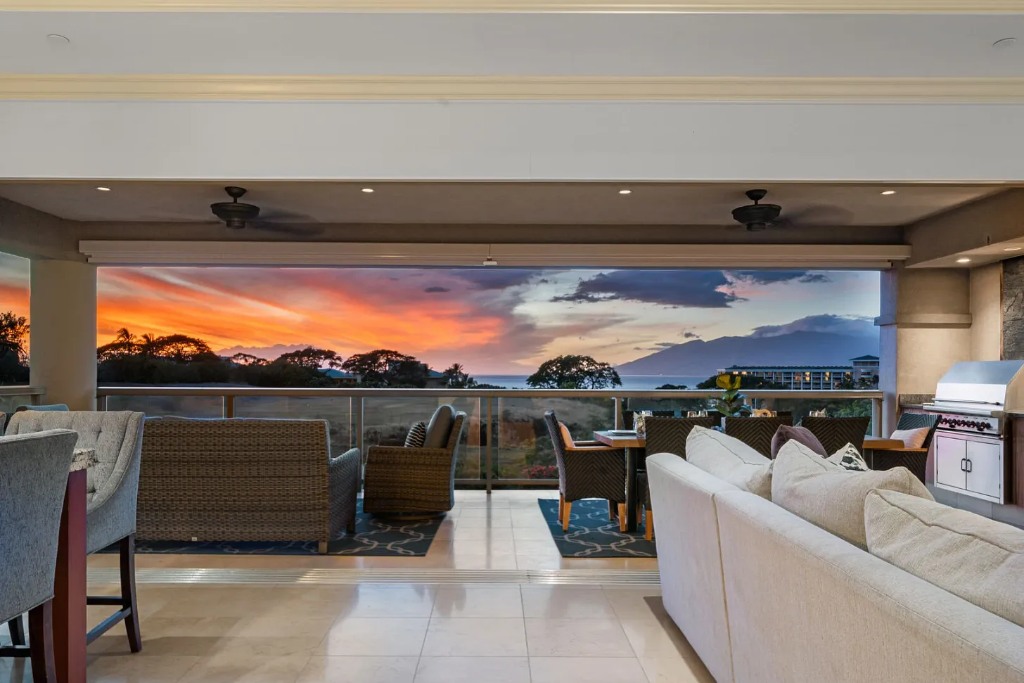
Last year, I represented the buyers of Ho’olei Villa 15-4 which was part of a multi-property exchange from one large asset into multiple assets accross the U.S. and closed for $4.8M. I represented a very similar asset to another client conducting a 1031 exchange from multiple properties in West Maui into Hoolei which closed for $6.1M in 2024. These price adjustments are on par with general market corrections. Both Hoolei Villas 15-4 and Hoolei Villas 23-3 are now professionally protected and optimized by our partnership with Maui Paradise Propertes
The Role of 1031 Exchange Buyers in the 2026 Market
One notable trend emerging in this phase of the Maui vacation rental cycle is the reactivation of 1031 exchange capital.
I commonly represent buyers and sellers completing 1031 exchanges — capital that was required to be redeployed under IRS timelines. Importantly, these are not speculative purchases. They are a strategic consolidation of assets.
That distinction matters.
1031 buyers typically:
-
Underwrite conservatively
-
Prioritize zoning clarity and compliance
-
Focus on asset durability
-
Think in decades, not quarters
When experienced investors are willing to deploy exchange capital into a micro-market during a recalibration phase, it suggests pricing has reached levels they consider defensible. Unlike momentum buyers in peak cycles, 1031 investors are often adding to legacy portfolios — strengthening positions in assets they know intimately rather than chasing appreciation. This type of capital is steady, tax-advantaged, and long-term oriented. Its presence in 2026 is one of the more compelling signals of stabilization.
Why 2026 May Mark the Bottom of This Cycle
Markets rarely announce bottoms with certainty. They stabilize quietly.
Several indicators suggest 2026 may represent that inflection point:
-
Prices have adjusted to reflect operating realities
-
Interest rates have normalized relative to recent highs
-
Inventory is aligning with current absorption
-
Buyers are underwriting conservatively
When downside risk becomes limited and fundamentals improve, long-term opportunity often follows. This is no longer a market driven by momentum — it is one driven by discipline.
What This Means for Maui Vacation Rental Buyers and Owners
For Buyers
-
Prioritize zoning clarity
-
Underwrite real operating costs
-
Focus on asset quality over speculative appreciation
-
Evaluate management infrastructure carefully
For Owners
-
Evaluate positioning within your micro-market
-
Review management efficiency and expense controls
-
Understand how current rates impact hold vs. exit strategy
The Maui vacation rental market in 2026 rewards professionals, not speculators.
Frequently Asked Questions About the Maui Vacation Rental Market
For disciplined buyers, 2026 may represent a strategic entry point. Pricing has corrected, rates have eased, and many operating cost risks have already been absorbed into valuations.
While no market guarantees a floor, current absorption behavior and pricing stabilization suggest limited downside relative to prior peak levels.
Hotel-zoned and legally secure properties generally face less regulatory uncertainty than apartment-zoned STRs. Zoning clarity is now a primary underwriting factor.
Major insurance increases appear to have stabilized. Most current expenses are now disclosed and priced into transactions. Many complexes have undergone large special assessment projects: Mahana at Kaanapali, Papakea, Kamaole Sands, etc. so it is important to uncover what has been taken care of and what is still outstanding.
For properly underwritten, professionally managed assets in strong resort locations, Maui remains one of the most desirable vacation rental markets globally.
Final Thoughts
The Maui vacation rental market has moved through a recalibration phase.
What remains is a more disciplined environment — one that rewards experience, strategic patience, and clear underwriting.
For buyers and owners who understand zoning, operating realities, and long-term demand drivers, this stage of the cycle may represent one of the most compelling opportunities in recent years.
If you are evaluating whether to buy, sell, or reposition a Maui vacation rental property, clarity matters more than speculation.
I’m always happy to be a resource.
Markets stabilize when uncertainty declines — even if expenses remain elevated.
Today’s buyers are underwriting transactions with visibility and clarity, not surprise.
About the Author
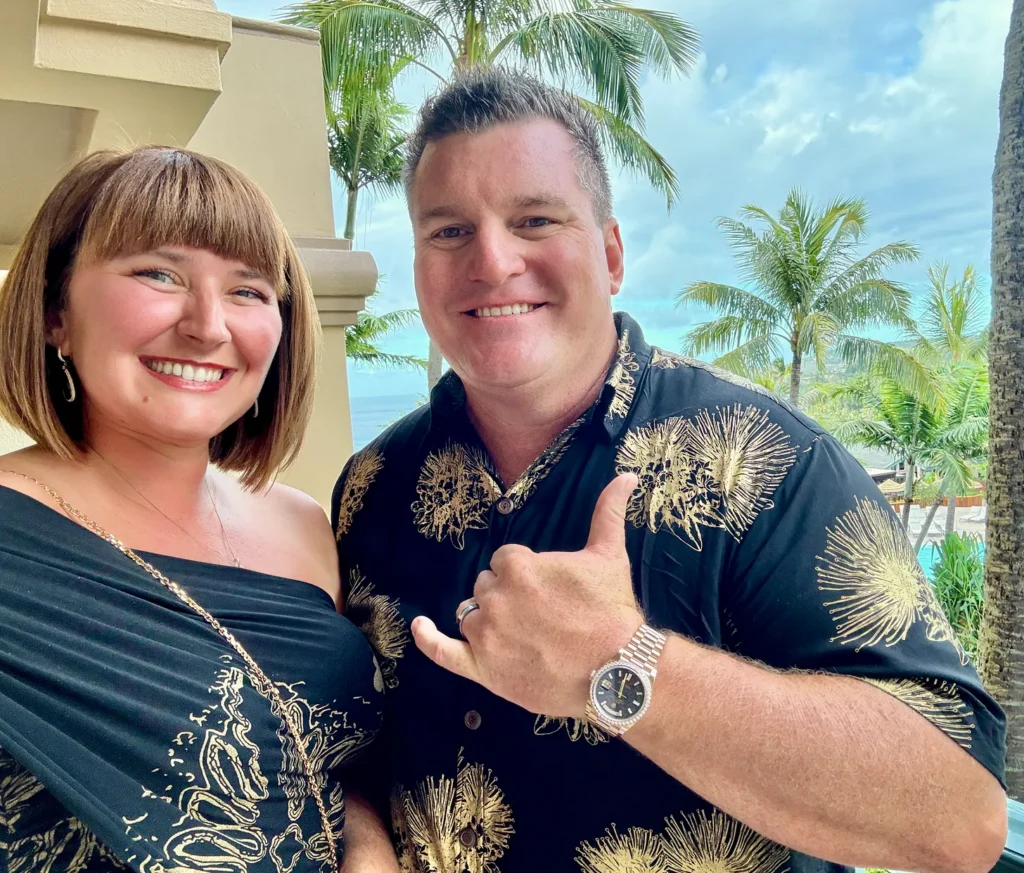
I work with buyers and owners at every stage of the vacation rental lifecycle.
As a 3rd. Generation Maui Born and Raised Realtor with Compass, I help clients evaluate and purchase vacation rental properties with a clear understanding of zoning, regulatory risk, rental revenue analysis, operating costs, and long-term resale considerations. Through our partnership with Maui Paradise Properties, our team provides full-service, white-glove vacation rental management built around asset protection, performance, and trust.
If you’re exploring ownership, considering a management change, or simply want a second opinion, I’m always happy to be a resource.